


- Học kỳ
- SU2026
- Thời Gian
- 6/8/26
- Loại tài liệu
- FE
- Mã Đề
- ENM302_SU26_RE_R_148593
ENM302_SU26_RE_R_148593
ENM302_SU26_RE_R_148593 Reading Questions
This document contains a reading comprehension passage titled Building vs. Running a Business along with multiple-choice questions. It discusses the differences between the building phase and the running phase of a business, common startup failure reasons, and strategies for success. The materials provide practical insights into entrepreneurship and operational management.ENM302_SU26_RE_R_148593 Reading Questions
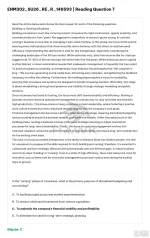
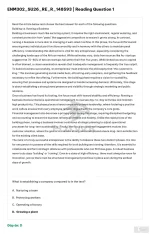
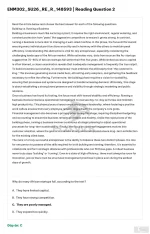
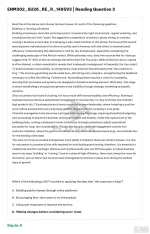
Building vs. Running a Business
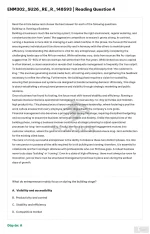
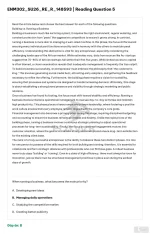
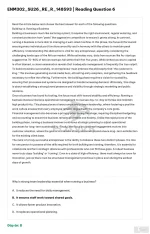
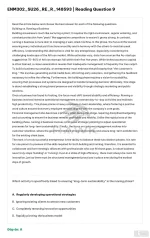
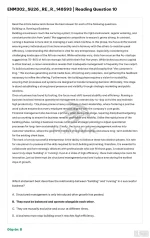
Building a business is much like nurturing a plant; it requires the right environment, regular watering, and constant protection from pests like aggressive competitors to ensure it grows strong. In contrast, running a business is more akin to managing a well-oiled machine. In this phase, the focus shifts toward ensuring every individual part functions smoothly and in harmony with the others to maintain peak efficiency.
Understanding this distinction is vital for any entrepreneur, especially considering the challenging landscape of the African market. While estimates vary, data from sources like Au-startups suggest that 70-80% of African startups fail within their first five years. While limited access to capital is often blamed, a closer examination reveals that inadequate management is frequently the true culprit.
To build a business successfully, an entrepreneur must embrace the philosophy that the customer is king. This involves generating social media buzz, attracting early adopters, and gathering the feedback necessary to refine the offering. Furthermore, the building phase requires a vision for scalability, ensuring that processes and systems are designed to handle increasing demand.
Ultimately, this stage is about establishing a strong brand presence and visibility through strategic marketing and public relations.
Once a business has found its footing, the focus must shift toward stability and efficiency. Running a business involves intensive operational management to oversee day-to-day activities and maintain high productivity. This phase places a heavy emphasis on team leadership, where fostering a positive work culture ensures that employee remains aligned with the company s core goals.
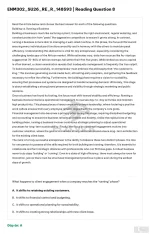
Financial management also becomes a primary pillar during this stage, requiring disciplined budgeting and accounting to ensure the business remains profitable and healthy. Unlike the rapid pivots of the building phase, running a business involves continuous strategic planning to adjust operational processes for long-term sustainability. Finally, the focus on customer engagement evolves into customer retention, where the goal is to maintain strong relationships and ensure long-term satisfaction for the existing client base.
The mark of a truly successful entrepreneur is the ability to balance these two distinct phases. It is rare for one person to possess all the skills required for both building and running; therefore, it is essential to collaborate and form strategic alliances with professionals who can fill those gaps. A robust business never truly stops building or running.
Even in a state of high efficiency, there must always be room for innovation, just as there must be structured management practices in place even during the earliest days of growth.
Reading
Question 1
What is establishing a company compared to in the text?
A. Nurturing a team
B. Protecting workers
C. Operating a factory
D. Growing a plant
Reading
Question 2
Why do many African startups fail, according to the text?
A. They have limited capital.
B. They face strong competition.
C. They are poorly managed.
D. They expand too quickly.
Reading
Question 3
Which of the following is NOT involved in applying the idea that the customer is king?
A. Building public interest through online platforms
B. Encouraging first-time users to try the product
C. Using user responses to improve the service
D. Making changes before considering users views
Reading
Question 4
What do entrepreneurs mainly focus on during the building stage?
A. Visibility and accessibility
B. Productivity and control
C. Stability and efficiency
D. Competitive market
Reading
Question 7
In the running phase of a business, what is the primary purpose of disciplined budgeting and accounting?
A. To facilitate rapid pivots and market experimentation
B. To attract initial seed investment from venture capitalists
C. To maintain the company s financial stability and profitability
D. To eliminate the need for long-term strategic planning
Đính kèm
-
 ENM302 SU26 FE R RE_007.webp290.6 KB · Lượt xem: 0
 -
 ENM302 SU26 FE R RE_001.webp275.1 KB · Lượt xem: 0
 -
 ENM302 SU26 FE R RE_002.webp278.6 KB · Lượt xem: 0
 -
 ENM302 SU26 FE R RE_003.webp288.5 KB · Lượt xem: 0
 -
 ENM302 SU26 FE R RE_004.webp278.4 KB · Lượt xem: 0
 -
 ENM302 SU26 FE R RE_005.webp278.9 KB · Lượt xem: 0
 -
 ENM302 SU26 FE R RE_006.webp283.5 KB · Lượt xem: 0
 -
 ENM302 SU26 FE R RE_008.webp289 KB · Lượt xem: 0
 -
 ENM302 SU26 FE R RE_009.webp285.9 KB · Lượt xem: 0
 -
 ENM302 SU26 FE R RE_010.webp292.2 KB · Lượt xem: 0
 -
 ENM302 SU26 FE R RE_011.webp312 KB · Lượt xem: 0
Sửa lần cuối:

